Google Cloud KMS Code Signing at $219.99
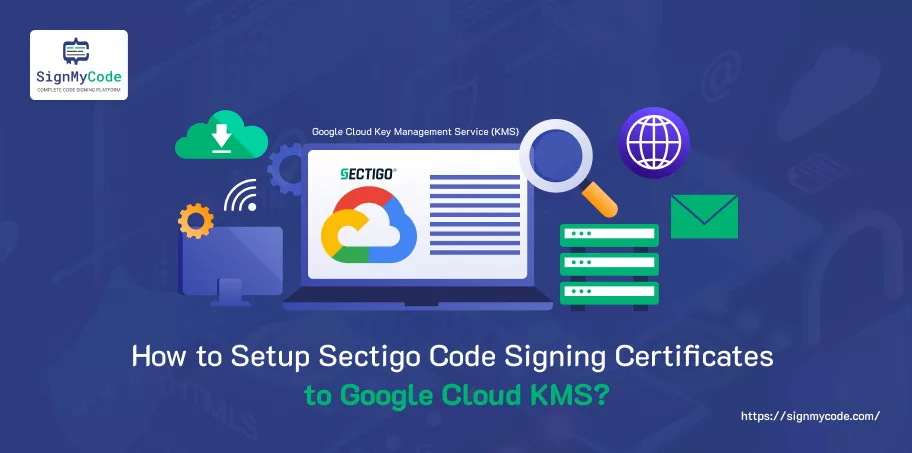
Google Key Management Service (KMS) is a secure, cloud-based code signing solution to create and manage cryptographic keys. Trust your signatures with Sectigo.
Type
 Money Back
Guarantee
 Lowest Price
Guarantee
Cloud Code Signing
FIPS 140-2 Level 3
Non-extractable Keys
Secure Software Distribution
24/7 Sales & Live Support
No Physical USB Required
Cloud HSM (Google)
Sectigo

Google KMS is a cloud Key Management Service provided by Google Cloud, which helps organizations manage their cryptographic keys securely in the cloud. It also helps protect sensitive data by managing the encryption keys used for encrypting data, application signing, and secure communication. It is designed to be scalable and compliant, and it also integrates well with other Google Cloud services.
As far as its functionality is concerned, Google Cloud KMS is used to create and store keys within hardened security infrastructure, including FIPS 140-2 Level 3 HSM-backed protection. Applications make requests for cryptographic operations such as encryption, decryption, or signing using secure APIs, without revealing the private keys. This helps ensure that the keys are always secured while also allowing automated, policy-driven access control and auditing.
It is powered by Sectigo Code Signing + Google KMS, which helps provide secure and scalable cloud code signing. Signtool.exe does not work with GCP KMS directly, as there is no CNG provider for Google Cloud. Instead use Jsign. Jsign is the recommended signing tool for Google Cloud KMS as it supports GCP KMS natively and works on Windows, macOS and Linux. Jsign handles Authenticode signing (.exe, .dll, .msi) and JAR signing.

Features and Benefits of Google Cloud KMS Code Signing Certificate

HSM Attestation
This validates, in a verifiable manner, that cryptographic keys have been securely generated and stored within a FIPS 140-2 Level 3 validated HSM. This demonstrates that the key material was indeed generated within the trusted hardware environment and that it has not left the module or been modified.

Microsoft CNG Integration
Microsoft CNG integration enables seamless interaction with Windows cryptographic frameworks using the Cryptography API: Next Generation model. Organizations can sign Windows executables and drivers using standard tools such as SignTool, while private keys remain protected inside Cloud HSM.

Asymmetric Signing
This method utilizes a key pair to create and verify digital signatures. The private key signs software, documents, or transactions securely, and the public key verifies their authenticity and integrity to prevent unauthorized copying and ensure non-repudiation in a software distribution environment.

Secure Key Storage
Keys are stored inside the secure hardware so they cannot be removed. They are stored separately from the operating system and the apps. This reduces the risk of malware and insider threats. Access is granted based on who you are. Everything is logged to aid in auditing.

PKCS#11 Library
The PKCS#11 library provides a standardized interface for cryptographic operations, enabling applications to interact with hardware security modules consistently. It allows existing signing tools and enterprise systems to perform encryption and signing without code rewrites.

External Key Manager
The External Key Manager allows the organization to keep its keys out of the cloud infrastructure while still using the cloud, ensuring that the keys and the data remain strictly separated, allowing the organization to meet the required regulations and data sovereignty requirements.
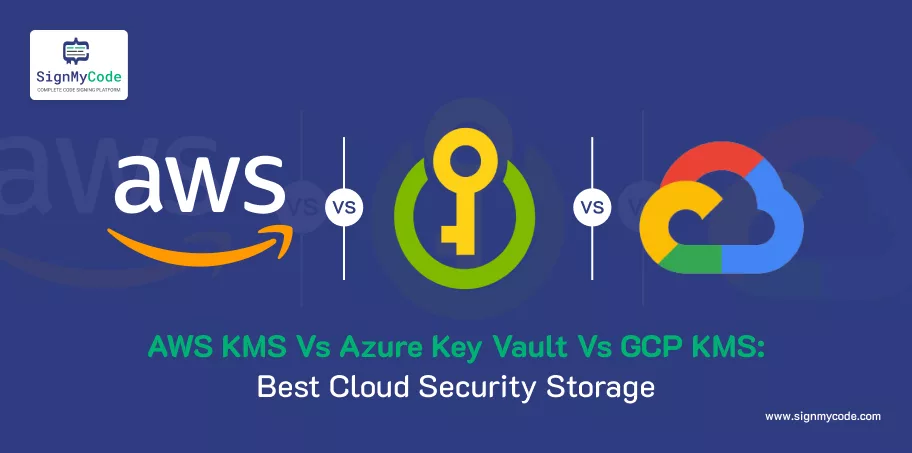
Compare Azure Key Vault Vs GCP KMS for Cloud Key Management
| Azure Key Vault | Feature | Google Cloud KMS |
|---|---|---|
| Azure-centric environment & Windows servers | Use Cases Best For | Google Cloud Platform environment |
| Using Microsoft-managed keys, Secrets, and certificates management solution | Default Encryption Methodology Primary Purpose | Using Google-managed keys Specifically for encryption key management purposes |
| AES-GCM, RSA-OAEP | Encryption Techniques Supported | RSA PKCS#1v1.5, RSA-OAEP |
| General-purpose (keys, secrets, certificates) | Scope | Narrow-focused (keys, secrets separately) |
| Built-in | Secrets Management Capabilities | Not available (must use other product/service) |
| Available using Azure Key Vault features | Key Rotation | Available, configurable per key |
| Yes, (Premium plan / Managed HSM) | HSM Support | Yes (Cloud HSM) |
| Yes, AES 256-bit encryption keys wrapped in RSA 2048-bit keys | Bring Your Own Key (BYOK) | Yes, AES 256-bit encryption keys wrapped in RSA 2048-bit keys |
| Yes (with Managed HSM/HYOK capabilities) | External Key Management | Yes (with External Key Manager capabilities) |
| Simple, vault-based approach | Structure & Architecture | Key hierarchy (project → key ring → key) |
| Azure AD, RBAC and Access Policies | Access Control Mechanisms | IAM roles/policies |
| Azure Services & Microsoft ecosystem | Integrations and Integrability | GCP services like BigQuery, GCS, Compute Engine |
| Azure Monitor/Logs | Audit & Logs | Google Cloud Audit Logs |
| Limited/indirect | Multi-region Keys | Support for multiple regions |
| Store and retrieve application secrets | API / Use Style | Encrypt/decrypt via API |
| Per operation + key tier | Pricing Model | Per key version + operations |
| Application secret + Certificate + Key storage | Best Use Case | High scale encryption and complete key lifecycle management |
| $5 per key per month (Premium Vault) | Key Storage Cost | $1–$2.5 per key version |
| Buy Now | Buy Now |
Code Signing Using Google Cloud KMS (Cloud HSM)
-
Buy a Code Signing Certificate
Get a code signing certificate issued by a trusted Certificate Authority like Sectigo. Perform the necessary identity validation. Once the request is approved, the code signing certificate is used to establish the verified identity of your organization with the signing key protected by the HSM.
-
Install the CNG Provider
Download the Google Cloud KMS CNG provider for your Windows machine. This enables Microsoft’s Cryptography API: Next Generation (CNG) framework to communicate securely with Cloud KMS and Cloud HSM for signing operations.
-
Create a Key Ring in Google Cloud KMS
In the Google Cloud Console, create a new Key Ring in your preferred region. The key ring acts as a logical container to organize and manage your cryptographic keys securely.
-
Create a Public-Private Key Pair Using Cloud HSM
Create an asymmetric signing key in Cloud HSM. Choose a suitable algorithm, such as RSA 2048 or RSA 3072. Ensure it is hardware protected and non-extractable to achieve maximum security and compliance.
-
Download the Key’s HSM Attestation Record
Once you have generated your key, you need to obtain the HSM attestation record. This is a form of digital proof that the generated private key was produced and stored securely within the HSM device.
-
Generate the Certificate Signing Request (CSR)
Using your HSM-generated private key, you now need to generate your Certificate Signing Request. This request will comprise your public key and your organization details. This request is then sent to your Certificate Authority to obtain your code signing certificate.
-
Submit the CSR and Key Attestation Information
You now submit your CSR along with your HSM attestation record to your Certificate Authority. This is to prove to your Certificate Authority that your signing key is hardware-based and secure for code signing.
-
Sign Your Code Using a Sectigo Code Signing Certificate + SignTool
Once your Certificate Authority has issued your code signing certificate, you then need to import the issued certificate to the Windows certificate store for the Cloud KMS CNG provider. You then need to utilize the SignTool provided by Microsoft but with the Google Cloud KMS provider to sign your code while the private key remains secure within the Cloud HSM.
Follow the step-by-step instructions
Frequently Asked Questions
What is Cloud KMS?
Cloud KMS is a managed key management service from Google Cloud that lets organizations create, store, and control cryptographic keys for encryption, decryption, and digital signing in secure cloud environments.
What can Cloud KMS do?
Cloud KMS can generate, rotate, disable, and destroy cryptographic keys. It performs encryption, decryption, and digital signing operations while integrating with cloud services for secure application and infrastructure protection.
What encryption standards does Cloud KMS support?
Cloud KMS supports AES-256 symmetric encryption and asymmetric algorithms including RSA 2048/3072/4096 and EC P256/P384. With Cloud HSM, keys meet FIPS 140-2 Level 3 validation requirements.
Can I delete Cloud KMS keys or key rings?
Yes, keys and key versions can be scheduled for destruction with a built-in safety delay. However, deleting a key ring itself is not supported once created.
Can I export keys from Cloud KMS?
Software-managed keys may be exportable under certain configurations, but HSM-protected private keys are non-extractable, ensuring they cannot be exported or copied outside the secure boundary.
Can I import existing keys?
Yes, you can import externally generated keys into Cloud KMS, including into HSM-backed key versions, allowing migration from on-premises systems or third-party key management solutions.
How do I authenticate and authorize Cloud KMS access?
Access is controlled through Google Cloud IAM policies, service accounts, and role-based permissions. Authentication uses OAuth 2.0 tokens, ensuring secure, auditable API-based key operations.
Do Cloud KMS logs include access logs by default?
Yes, Cloud KMS integrates with Cloud Audit Logs to record administrative actions and key usage operations, providing visibility into encryption, decryption, and signing activities.
What is Google Cloud KMS Cryptographic Next Generation (CNG) provider?
The CNG provider enables Windows systems to connect Microsoft’s Cryptography API: Next Generation framework with Cloud KMS, allowing secure code signing through SignTool while keeping keys in Cloud HSM.
Why do I need an HSM or Cloud KMS key?
HSM or Cloud KMS keys protect private keys from theft, unauthorized export, or misuse. They provide compliance assurance, auditability, and stronger defence against software supply chain attacks.
Does it work for Kernel-mode Drivers?
GCP KMS meets the HSM requirement for kernel-mode driver signing, but you need Google KMS EV Code Signing for that.
Can I use Sectigo certificates with GCP KMS?
Yes, you can use Sectigo Code Signing Certs for Google cloud code signing as it supports GCP KMS key attestation. You need to choose Install on existing HSM mode while placing order.
How much does Google Cloud KMS cost?
Pricing is usage-based, starting at around $0.06 per 10,000 operations for asymmetric signing, making it cost-effective for high-volume operations compare to other cloud hsm service like DigiCert KeyLocker or Azure Key Vault.
What is the difference between GCP KMS and GCP CloudHSM?
Cloud HSM is not a separate standalone product in GCP. It’s a protection level inside KMS. Whereas GCP KMS with HSM protection level uses the same FIPS 140-2 Level 3 HSMs. You do not need a dedicated CloudHSM cluster; KMS HSM keys are sufficient for code signing.
We are rated 4.8/5
 REVIEWS
Real customer ratings and reviews at
REVIEWS
Real customer ratings and reviews at

I am very grateful to Sienna for helping with my request. She was understanding, responsive, and helpful throughout the process. In addition to Sienna, most of the customer support representatives I interacted with like Finn, Daniel were attentive, and very helpful. Their support made the experience smooth and pleasant.
Great customer service! Daniel was very helpful throughout the OV validation process, providing clear guidance on each step including D-U-N-S registration and Sectigo verification requirements. Highly recommended for first-time certificate buyers.
I finally got around to installing the new Sectigo EV cert token this afternoon. Everything worked the first time with no fuss. The documentation was spot on, the tools just worked, and Visual Studio saw the certificate immediately. Building, publishing and installing it was just as seamless.
Our Trusted Clients






Live Chat
Talk to our 24/7 code signing experts for issuance, validation, and installation help.

24/7 Ticketing Support
Raise your support and sale ticket, we will answer immediately.

Code Signing Tutorials
Code Signing Tools
Why SignMyCode?
Globally Recognized Certificate Authority (CA)
Quick Validation and Issuance by Pro Code Signing Experts
Technical Troubleshooting in Real-Time
24 x 7 Customer Support via Live Chat & Email